



Fibre Bragg Grating (FBG) Sensors
A Fibre Bragg Grating (FBG) is a short section of optical fibre in which the refractive index of the core changes periodically. This grating reflects a narrow band of wavelengths of the light travelling through the fibre and lets the rest pass. Because the reflected wavelength shifts when the fibre is stretched or heated, an FBG works as a very precise sensor. Gratings are usually written into the fibre core with an ultraviolet laser interference pattern.
Many FBGs, each reflecting a different wavelength, can be placed along a single fibre. An instrument called an interrogator sends light into the fibre and reads all the reflected wavelengths, so one fibre becomes a quasi-distributed network of sensors.
Advantages of FBG sensors
- Passive and non-conductive: no electrical power at the sensor; safe in explosive areas and not damaged by lightning surges.
- Immune to electromagnetic interference: ideal near motors, transformers and high-voltage equipment.
- Multiplexing: dozens of sensors can share one fibre, and long cable runs (kilometres) are possible, which reduces wiring cost.
- Stable calibration: the measurement is encoded in wavelength, so it does not drift with cable length or light intensity.
- Small and robust: glass fibre does not corrode, survives millions of strain cycles and can be embedded in composites, concrete and steel structures.
- Versatile: FBGs measure strain and temperature directly; suitable packaging also allows pressure, acceleration, displacement and other measurements on the same interrogator.
- Wide temperature range: standard sensors cover cryogenic to a few hundred °C, and special gratings go much higher.
Applications
- Structural health monitoring of bridges, tunnels, dams, buildings and aircraft
- Power and energy: transformer, cable and wind-turbine blade monitoring
- Oil and gas: downhole and pipeline monitoring
- Railways: axle counting and track monitoring
- Static and dynamic strain and temperature monitoring in industry and research
- Optical communications: filters, wavelength division multiplexing, fibre lasers and amplifiers, dispersion compensation
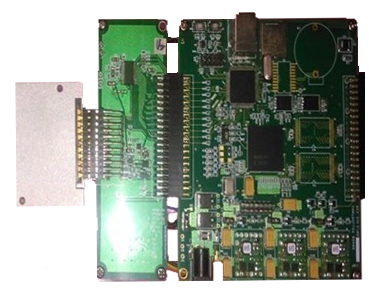
Argus Technologies has developed an FPGA-based data acquisition system for FBG interrogation; read about it in Data acquisition system for FBG sensors. Contact us for details.
